
Switzerland Skilled Worker Visa Application Guide
Switzerland is an idyllic destination place, full of innovation, high pay, and strict quality of life, among ambitious non-EU/ EFTA professionals. With that said, the process of gaining access to the Swiss labor market as a third-country nation is a highly selective one, which has its own criteria and annual quotas.
The Sponsorship and the Quota Reality
In contrast to the majority of the EU, Switzerland has a two-level system of immigration that gives significant preference to local and EU/ EFTA talent. The success of your application will depend on how well your employer manages to go through this rigid machine.
The Swiss Work Permit Quotas 2026
The work permit quotas 2026 in Switzerland have been reassured by the Federal Council as it will not change, it will provide predictability, but there will be a fixed limit on the number of non-EU workers.
- B Residence Permits (Long-term): There is 4,500 permits which are one year long and may be renewed and which are to be used in long-term positions of skill.
- L Short-term Permits (Temporary): This has 4,000 permits with a maximum lifespan of 12 months, usually utilized when working on a project or when issuing an initial contract.
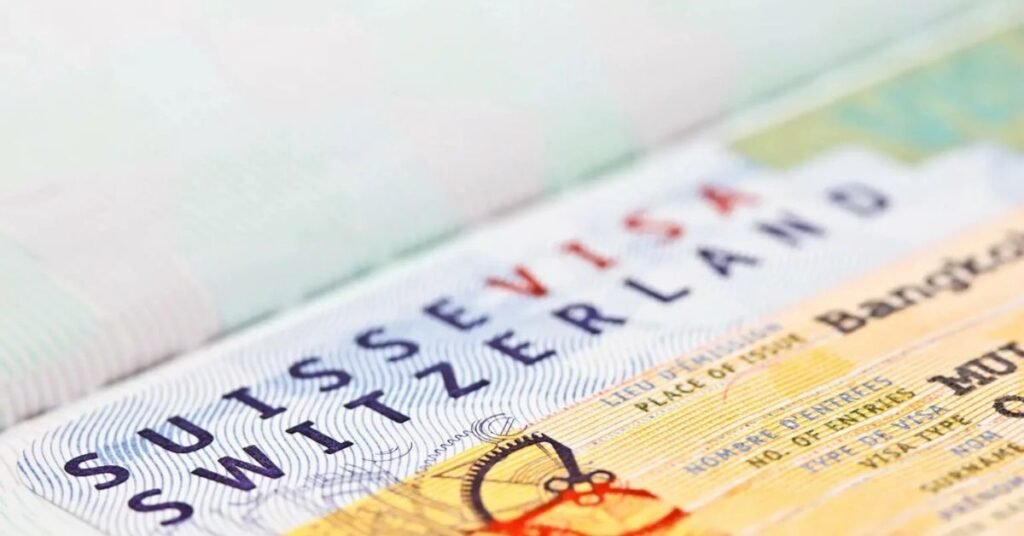
The Swiss Employers Sponsorship Non-EU Guide
The employer has the main role to play in the Switzerland Skilled Worker Visa Application Guide. They have to demonstrate that they need to hire you and that they can not replace him/her.
Triple Hurdle (Labor Market Test):
The employer has to follow the Inländervorrang (Priority of Nationals) rule:
- Local Search: This was a job that could not be occupied by a Swiss national.
- EU/EFTA Search: The vacancy was not available to an EU/EFTA free movement country.
- Qualifications: You should have Specialist skills necessary to work at Switzerland, which usually has a University degree requirement Swiss visa and a number of years of relevant, unique experience.
Eligibility and The Application Process
The process of obtaining a Switzerland work visa is employer-led although the applicant should prepare carefully.
Applicant Profile: Highly Qualified Status
Swiss authorities endorse permits only to people whose work is in general economic interest of the country. This implies that you have to be a professional:
- Position: Managerial, technical or extremely technical (e.g., IT jobs Switzerland visa sponsorship, specialized Engineering jobs Switzerland no EU, Finance, or R&D).
- Education: A Bachelor of university or higher qualification.
- Experience: A number of years of professional experience in the area of specialization that is closely related to the job description.
Step-by-Step Application Process (The Visumverfahren)
The two processes are the work permit and the entry visa which are different yet not simultaneous.
Salary and Compliance
That you are a highly qualified specialist and not taking over the local workers is shown in your salary.
- Requirement: The salary is supposed to be in accordance to the professional and regional standard (prevailing wage).
- Benchmark: Although there is no single Minimum salary for Swiss work visa 2026, the successful candidates in the high-demand sectors such as IT or Finance jobs Zurich visa are expected to receive a salary of at least CHF 80,000130,000+ gross per year. The better your pay, the better your case.
Documentation and Post-Arrival
Important Documentation Checklist
Make sure that your papers have been of high standards with SEM Federal Migration Office Switzerland:
- Valid Passport (must be 3 months in duration and the validity must be beyond the intended departure date).
- Application forms filled in for Cantonal Migration Office.
- Signed employment contract.
- Full resume with academic record and transcripts.
- Original diplomas and professional certificates (which usually need certified translations).
- Evidence of the previous professional activity (reference letters/employment letters).
- Clear Police Clearance Certificate/ Clean Criminal Record.
- Report submitted by the employer (Labor Market Test proof, justification letter).
Post Arrival: Last Swiss Work Visa Procedures
When you land it is not the end of the journey. After stamping the entry visa (Type D) you have 14 days before completing the Post-Arrival Steps:
- Registration: Registering in Cantonal Authority Switzerland (or commune where you live). You will have to carry your passport, lease agreement and permit approval letter.
- TIE Card: You will be issued with the Foreigner Identity Card (TIE) which is your B Permit (long-term) non-EU worker residence status.
- Insurance: Buy compulsory Swiss health insurance within three months of employment.
- Social security: The employer will enroll you in the Swiss social security (AHV) registration.
FAQs
Does that mean that the B permit application process is non-EU worker identical to visa application?
No, they are sequential. The B Permit permit is the one that allows you to work and live, which is submitted by the employer in Switzerland. When the B Permit is approved, you apply at the Swiss Embassy visa application non-EU (National D Visa) to obtain a permission to come to Switzerland, but only to enable a legal entry into the country.
How does an L Permit and a B Permit differ?
L short term permit application applies to stays not exceeding one year and is not usually renewable and limits you to a particular employer and Canton. The B Permit is long-term employment (more than one year) and can be renewed annually, as well as provides an opportunity to obtain permanent residence ( Residence permit C Switzerland after 10 years ) and Family reunification Swiss work visa.
What is the average Work permit processing time Switzerland?
Normal time would be 8-16 weeks since the employer returns the paperwork until you are stamped with the visa. This may be extended with the high seasons or where the Cantonal Migration Office demand more documentation.
Should the employer make an application on my behalf to have my visa done, am I required to pay the Fees on B permit non-EU?
In Switzerland, the fees of applying the work permit are paid by the employer. It is up to you however to cover the consular fees to the entry visa (D Visa) which will be applied at the Swiss Embassy/Consulate.
Can I change jobs on a B Permit?
The permit is usually employer/Canton specific during the initial two years of the B Permit (long-term) non-EU worker. The change in the job would need the new approval of the Cantonal Authority and may be not easy, but it becomes easier after two years.
Final Thought
The Switzerland Skilled Worker Visa Application Guide demands wisdom, patience and high value skill set to navigate through successfully. With the knowledge of the limits of the Swiss work permit quotas 2026 and under working cooperation with an employer ready to go through the Labor Market Test, you will be able to get. secure your B Permit and unlock one of the most rewarding professional experiences in the world. Start gathering your documentation now; the competition is fierce, but the reward is unparalleled.
Disclaimer
This article is for knowledge and educational purposes only. The information respect the Switzerland Skilled Worker Visa Application Guide, exclude the Swiss work permit quotas 2026 (4,500 B and 4,000 L legal instrument for third-country nationals) and postulation steps, is based on actual official information from the Swiss Province Secretariat for Movement (SEM) and Cantonal government. Readers are powerfully advised to verify all actual requirements, fees, and activity directly with the relevant Cantonal Migration Office or the formal Swiss Embassy visa application non-EU entrance before commencing any application process.