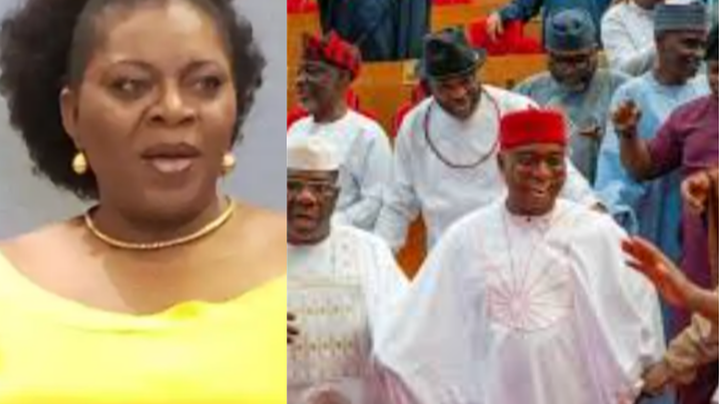
Maryanne Moghalu recently questioned the continued presence of Senator Ned Nwoko in the Senate amidst alleged personal issues This article explores the tension between public scrutiny private life allegations and the accountability of elected officials in Nigerian democracy .
The intersection of private life and public office is a perennial flashpoint in democratic societies and in the Nigerian political sphere it often ignites heated debate This tension was recently encapsulated in a pointed rhetorical question posed by Maryanne Moghalu the wife of former Central Bank Deputy Governor Kingsley Moghalu “Why Is Ned Nwoko Still In Senate Is Everyone Deaf To Accusations Of His Estranged Wife” .
This striking query shared on public platforms goes beyond a simple call for information it demands a deeper examination of political accountability public scrutiny and the actual mechanisms available to address allegations—whether proven or merely asserted—against a serving elected official While the specific nature of the “accusations” Moghalu references are not widely detailed in public or official legal reports the core of her question resonates with citizens who expect higher ethical standards from their representatives .
The Burden of Public Trust and Accountability
Senator Ned Nwoko representing Delta North Senatorial District holds a position of significant public trust The mandate he received from his constituents implicitly carries an expectation of moral and ethical conduct both within the Red Chamber and in his personal dealings Moghalu’s statement acts as a powerful reminder that for many in the electorate a politician’s private life is inseparable from their fitness for public service .
Also Read : Diplomatic Storm Reactions After Ted Cruz Announced That Next Step Is To Know Who Nigerian Leaders Are
In Nigeria as in many parts of the world politicians are often held to account by two separate courts the court of public opinion and the court of law constitutional procedure The public-opinion court operates on sentiment moral outrage and media reportage leading to social condemnation The formal legal and political framework however requires concrete evidence of criminal wrongdoing or specific breaches of the Code of Conduct for Public Officers before an official’s tenure can be terminated .
Navigating Private Allegations vs Public Duties
The crux of the matter lies in distinguishing between allegations relating to personal matters often originating from estranged spouses or family members and those that directly impact the execution of official duties involve financial impropriety in office or constitute a legal crime .
The Nigerian Constitution and the electoral laws provide specific stringent grounds for the recall or removal of a Senator These typically involve conviction for a criminal offense mental or physical incapacitation or the complex multi-stage process of a successful constituent-led recall Allegations concerning personal or domestic disputes while potentially damaging to a public figure’s reputation rarely meet the high bar required for formal political removal unless they lead to a criminal indictment or a clear breach of the Code of Conduct Bureau regulations .
The public’s frustration as channeled by Moghalu’s statement stems from a perceived disconnect the belief that a person under intense ethical or personal scrutiny should perhaps step aside versus the constitutional reality that a Senator remains in office until legally or electorally removed This tension highlights a significant gap in the ethical expectations vs the legal provisions in the country’s governance structure .
The Challenge to the Senate and Political Class
Moghalu’s forceful question is a direct challenge not just to Senator Nwoko but to the entire political establishment It asks why the system appears deaf to public or alleged private concerns The implication is that the political class often shields its own prioritizing procedural legality over the moral outrage of the citizenry .
For the Senate addressing such a high-profile public query even if the underlying claims are unverified is crucial for maintaining institutional integrity While the Senate cannot act as a court of family law its leadership often faces pressure to implement internal ethical reviews or at least make a public statement when the conduct of its members becomes a significant national talking point Ultimately the question forces a necessary dialogue about the role of ethics personal accountability and the threshold for action within the legislative body .
In a functioning democracy public commentary like that of Maryanne Moghalu serves a vital function it holds a mirror up to power and forces introspection While only verifiable facts and due legal process can determine the formal status of any elected official the societal pressure stemming from such pointed public queries ensures that the demand for transparency and ethical governance remains an active part of the national political conversation .
Disclaimer
The news information presented here is based on available reports and reliable sources focusing on the public commentary made by Maryanne Moghalu and the subsequent analysis of accountability in public office Specific details of the alleged accusations mentioned in the quote are not publicly verified in official legal or news reports Readers should cross-check updates and legal filings from official news outlets and government sources .