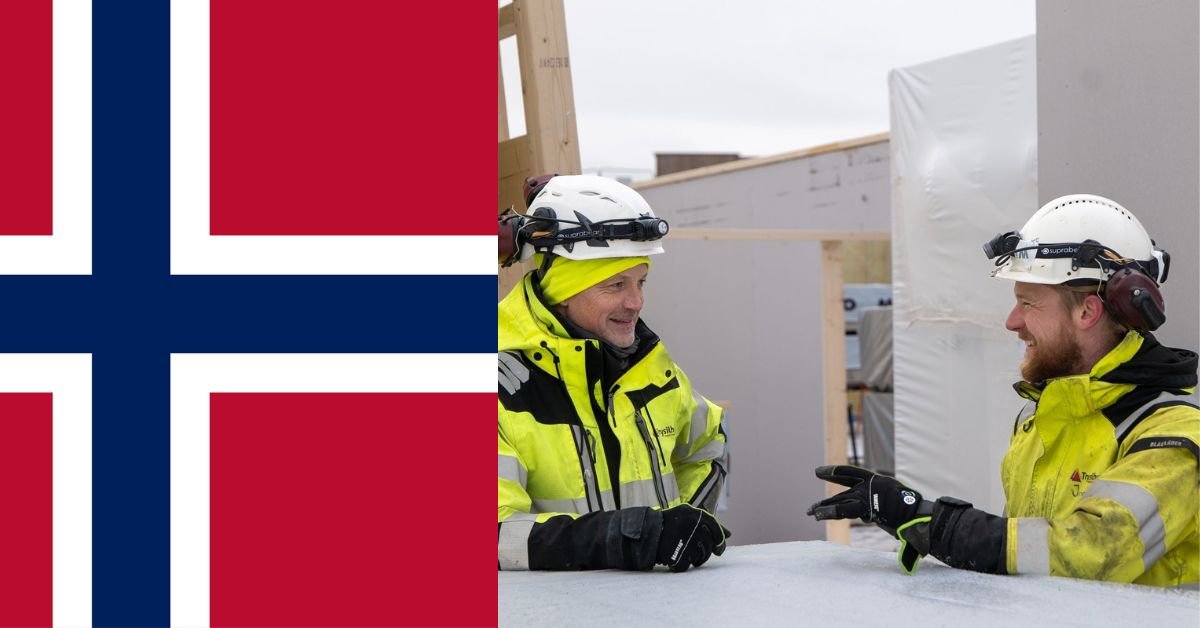
job opportunities Norway Skilled Trade Workers Needed – Visa Information
Norway, the land of fjords and high standards is already experiencing a huge skills crunch, which makes it one of the most commercially attractive non-EU Skilled Trade Workers (Faglært) in the world. With the busy construction projects in Oslo, the desperate industrial infrastructure in the coast, the need of certified Tmrier (Carpenters), Elektriker (Electricians) and Sveiser (Welders) is a pressing one and is supported by some of the highest remuneration packages in the world.
But to get a job and the required Work Permit one has to through the red tape, which is achieved by outlining the most prominent obstacles, namely demonstrating the qualifications and adhering to the rigid minimum wage rates
In-Demand Expert Trades and Necessary
An individual, universal minimum wage does not exist in Norway2 but rather the wage is stipulated through Collective Agreements on certain, frequently regulated, areas and provides high Salary Thresholds to eligible tradespeople.
Core Roles in Critical Need
When your specialization belongs to one of the following categories, you are in high demand to have a Job Offer Requirement by a Norwegian Employer:
- Construction/ Building: Tumrer (Carpenter), Rorerlegger (Plumber), Murere (Bricklayer), and Beiderbecke (Concrete Worker).
- Industry & oil/gas: Sveiser (Welder), Industriell Montorer (Industrial Fitter), and Mekaniker specialist (Mechanics/Technicians).
- Infrastructure: Elektriker (Electrician) and Veibygging (Road Construction) experts.
An immigrant skilled worker residence permit.
To the vast majority of Faglært (Skilled Workers), who are external to the EU/EEA, their way into Norway is via the Oppholdstillatelse for Fagutdannede.
- The Two principal Qualifications to be Made.
- In order to obtain such permit you have to fulfill one of the following requirements:
- Vocational Training: The Vocational training must be completed equivalent to the Norwegian Fagbrev (Trade Certificate/ apprenticeship Diploma), which is generally a three year programme at the upper secondary school level.5
- Long Work Experience: When you are not trained, the Equivalency Requirement usually will demand that you have at least six years of the relevant professional experience and that the official work certificates and references prove that you are competent and is similar to the formal Fagbrev.
How the Permit Process Works
The permit system of Norway is very effective as it does not usually entail a Labour Market Test on the Skilled Worker category.
- Job First: Obtaining a Firm, Full-Time Employment offer (accepted minimum position of 80 percent) with a certified Norwegian Employer.
- Application: You apply through the UDI Application Portal which is electronic.8 The application contains the terms of employment, salary and your qualification.
- Entry/Collection: Whoever has the permit approved by UDI, then you must obtain an Entry Visa (D- Visa) to travel to Norway.10 When you arrive, you come to the Police Service (Politiet) to submit biometrics and be issued your physical residence card.
The Equivalency Challenge
The most crucial issue among the foreign Skilled Trade Workers, is the fact that they must prove that their current qualifications are equal to the Norwegian Fabre.
Recognition is Key
- In case of controlled occupations (such as Elektriker or certain healthcare roles), you will have to request that the Norwegian appropriate directorate (e.g. Direktoratet for samfunnssikkerhet og beredskap for electricians) approves the occupation before the UDI will become accommodating of the permit.
- Hint: In the unregulated trades, formal acknowledgment of the job is not required by the law; however, a formal evaluation by authorities such as HK-dir (The Norwegian Directorate for Higher Education and Skills) will likely expedite the UDI application process quite fast and persuade your prospective Norwegian Employer.
Post-Arrival Administration
After getting your Residence Permit, and after arrival, two things are essential to legal employment:
- Tax Card: You have to apply to a Tax Card (Skattekort) at the local Skatteetaten (Tax Office). This ensures that your employer pays the right side of the tax and you earn your salary and not less than the right one.
- D-Number: At the same time you are also given a new temporary national identity number (D-Number) that is mandatory in all administrative and banking activities.
Benefits in the long term and Family Immigration.
In Norway, the Residence Permit of Skilled Workers provides a safe future along with the family rights.
The Family Immigration
As soon as you have a permit, you can apply to have your spouse, registered partner or minor children come and live with you in Norway.
- Health Insurance: You and your family are automatically covered by the universal National Insurance Scheme (Folketrygden) of Norway as a legal resident worker.
- Permanent Residence: Three years of uninterrupted legal work allow you to apply Permanent Residence (Permanent which gives you permanent employment and residence rights in the country.
Final thought
Norway has proven to be a unique place one can invest in as it has made it a place that qualified tradesmen seek a life that is free of fear with high wages and favorable working conditions. It is not a far-fetched chance and success depends on finding a Norwegian Employer and carefully registering your Trade Certificate Equivalency .
Disclaimer:
The present information in the job is provided on an educational and informational level. The UDI has a strict regulation of the requirements of the Residence Permit of Skilled Worker . The critical information, such as the Minimum Hourly Wage (e.g., NOK 264.32/hr. of skilled construction workers) or the Equivalency Requirement are also to be revised on an annual basis. Before applying, please confirm all information and the exact conditions of your nationality, and employment opportunity on the Norwegian government sites (UDI and and verify all the information.